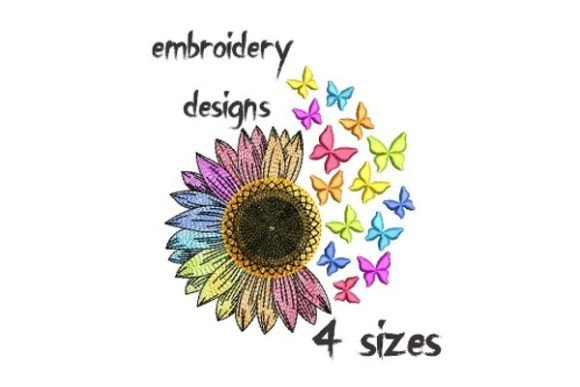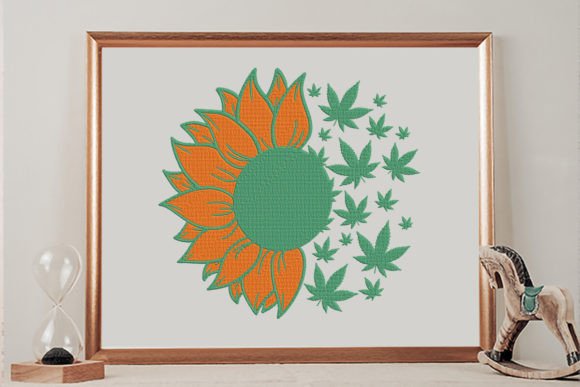
Sunflower Weed Embroidery Design
First Impression: Playful, Bold, and Instantly Memorable
As an embroidery designer who’s prepped over 200 craft fair booths—and shipped thousands of embroidery files to Etsy sellers and boutique makers—I’ll say it straight: Sunflower Weed lands with cheerful irreverence. It’s not just another sunflower. That “Weed” twist adds wit, personality, and a conversational hook—exactly what draws eyes at a crowded handmade market. It reads as modern rustic meets lighthearted botanical: bold enough for a tote bag centerpiece, charming enough for a tea towel accent, and clever enough to spark a smile (and a conversation) at your booth.
Where Sunflower Weed Shines on Craft Fair Products
This machine embroidery design thrives where handmade charm meets everyday utility. Here’s how it performs across your most reliable craft fair products:
- Tote bag design: A standout. At 4–5 inches wide, Sunflower Weed fills the lower corner or center panel beautifully—bold without overwhelming. Customers love that it feels intentional, not generic.
- Apron embroidery: Perfect above the pocket or centered on the bib. The playful name pairs effortlessly with kitchen creativity—ideal for foodie markets or farm-to-table fairs.
- Tea towel embroidery: Works best as a medium-scale focal (3.5–4.5"). On linen or cotton towels, the stitch definition holds up well—even with moderate fabric texture—especially when paired with high-contrast thread colors.
- Embroidered patch: Highly effective as a sew-on or iron-on. Its clear silhouette and balanced negative space make it legible at 2.75", and it lends instant character to denim jackets, backpacks, or kids’ caps.
- Pillow cover & small pouch: Scales down gracefully. At 3", Sunflower Weed retains charm and readability—no tiny details get lost. It elevates a simple linen pillow into a giftable handmade product.
- Caps & curved surfaces: Requires careful placement (crown or front panel only) and a low-profile hoop. Avoid the bill curve—it’s too tight for dense fill areas. Test first.
What Makes Sunflower Weed a Smart Booth Investment
At a craft fair, attention is currency—and Sunflower Weed earns it fast. Unlike overly delicate florals or minimalist line art, this Single Flowers Plants design delivers immediate visual clarity from 6 feet away. Its asymmetry (slightly tilted stem, off-center bloom) feels hand-drawn and human—not stock or AI-generated. That authenticity builds trust with discerning buyers.
It also strengthens brand consistency across your line. Pair it with neutral linens, kraft packaging, and mustard or sage thread palettes, and you’ve got a cohesive, earthy-but-witty aesthetic that stands out beside pastel macramé or glitter-heavy competitors.
For Etsy sellers and digital sellers: Sunflower Weed photographs exceptionally well. Its contrast-rich composition translates cleanly to thumbnail previews, and it pairs naturally with printable mockups—think flat-lay shots of embroidered totes beside mason jars and wildflower stems. That visual cohesion lifts click-through rates and perceived value.
Production Reality Check: What You Must Test Before Batch Runs
Don’t skip the test run—even with a seemingly simple embroidery file. Here’s what I check every time:
- Stitch density: Sunflower Weed includes layered petals and a textured center—common in premium Embroidery designs. On thick fabrics (like canvas totes or duck cloth aprons), use medium-weight cutaway stabilizer. Skip tear-away—it won’t hold.
- Fabric texture: On terry cloth tea towels or looped linen, reduce top tension slightly and slow machine speed. Dense fill areas can pucker if the fabric shifts.
- Thread contrast: This design relies on tonal variation (e.g., golden yellow center vs. deep brown stem). Test thread colors on your actual fabric—not just white swatches. Dark fabrics need brighter top threads to maintain legibility.
- Hoop size & spacing: Confirm the largest version fits your standard hoop. If it requires a 6x10" or larger, note that for booth prep—you’ll need extra hoops and setup time.
- Small-scale clarity: Below 2.5", the “Weed” lettering may blur. For patches or cap fronts under 3", request or create a simplified version—no fine serifs, no overlapping stems.
Why Sunflower Weed Fits Your Small Shop Product Strategy
This isn’t just another floral motif—it’s a conversation starter, a branding anchor, and a repeatable craft fair product engine. Buyers remember names with personality. They buy multiple items when one design unifies them: a matching tote + tea towel + patch set feels curated, not random. That drives average order value up—critical when booth fees and time are non-negotiable costs.
It also scales smartly. As a digital embroidery file, Sunflower Weed supports both physical product creation *and* digital sales—designers can license it for commercial embroidery, while crafters use it for personal projects. Just verify licensing terms before listing finished goods; some versions restrict mass production or require attribution.
Final Designer Notes Before You Stitch
Before cutting your first fabric piece:
- Run a test on scrap fabric—same weight, same dye lot, same stabilizer.
- Check thread contrast under natural light *and* booth lighting (many fairs use warm LEDs).
- Review spacing between elements: does the stem clear the edge? Does the flower sit comfortably above a seam or pocket?
- Create at least one real mockup—not just a digital preview. Drape that embroidered tote over your booth table. See how it reads in context.
- Compare fabric colors side-by-side: oatmeal linen vs. ivory cotton vs. ecru canvas all change how gold thread reads.
- Confirm commercial licensing status—especially if selling finished items on Etsy or wholesale to boutiques.
Sunflower Weed doesn’t ask for perfection. It asks for intention. When stitched with care on thoughtful products—totes that carry purpose, towels that dry dishes with joy, patches that declare quiet rebellion—it becomes more than decoration. It becomes part of your story. And that’s what sells at craft fairs, year after year.